Access rights
Define who can view, edit, approve or reuse a sensitive part record.

IP Protection
Industrial teams need to activate production without turning valuable design and manufacturing knowledge into uncontrolled file circulation.
GhostMatter supports controlled access, role-based permissions and governed sharing so that teams can delegate production while keeping sensitive data attached to the right digital asset and the right route.
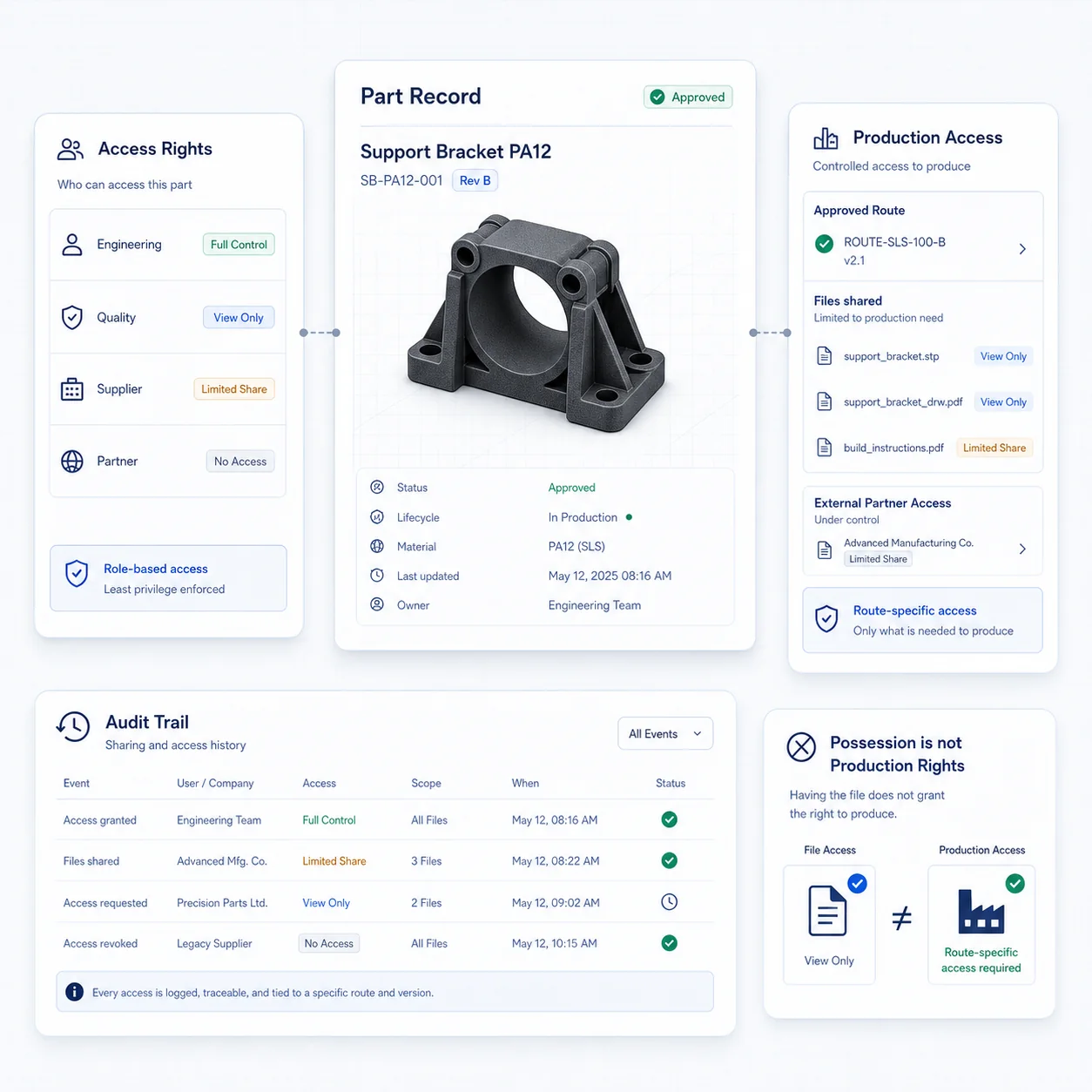
IP protection becomes practical when the system distinguishes visibility, approval, sharing and production rights instead of treating every file as a generic download.
Define who can view, edit, approve or reuse a sensitive part record.
Share route-specific information with internal teams or external partners only when needed.
Connect the right to produce with the approved route, not with uncontrolled file ownership.
IP protection becomes useful when teams can define the exact boundary between what must be shared to produce and what should remain restricted.
For many industrial parts, the operational need is not to distribute native files widely. It is to let the right party execute the right production route under controlled conditions.
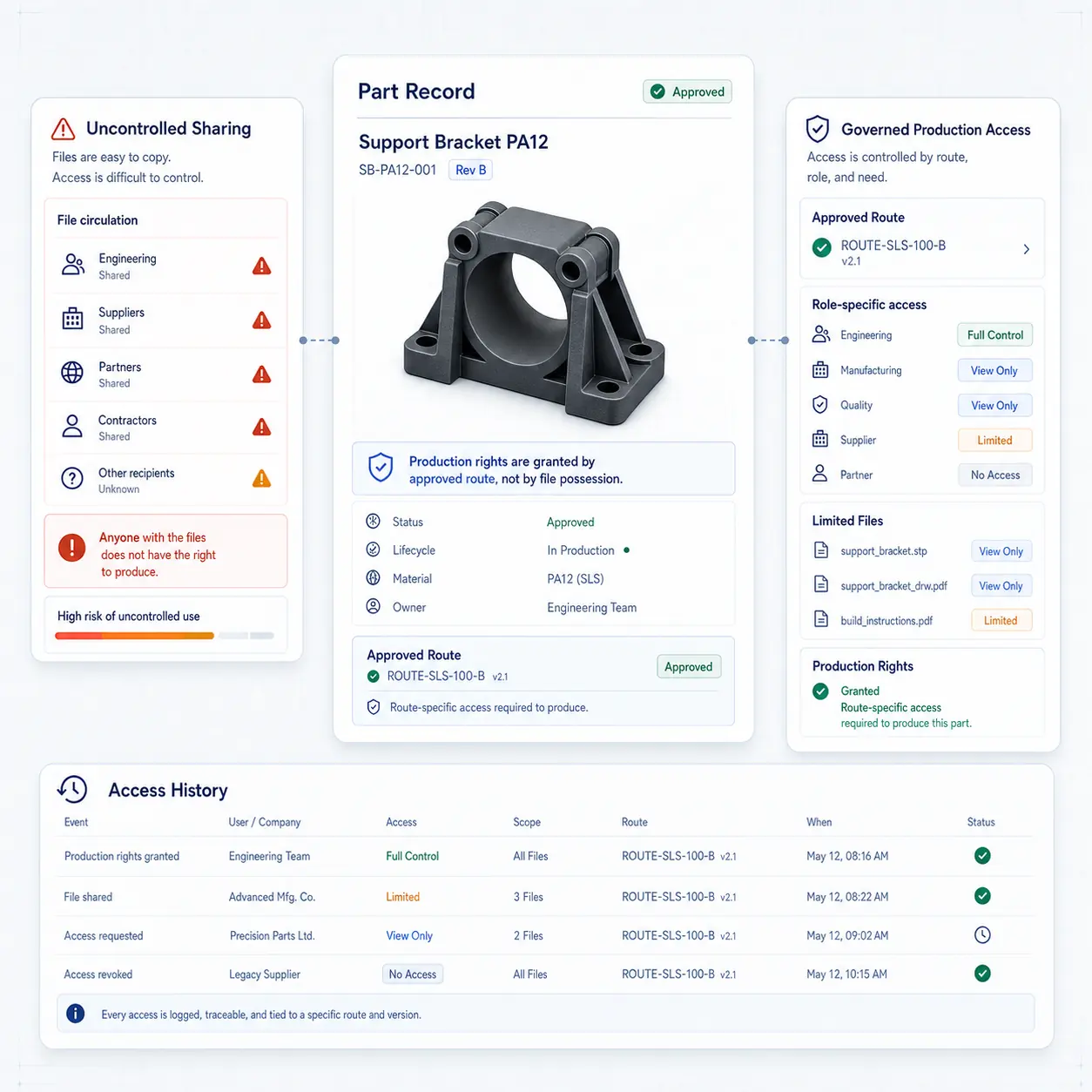
The need is rarely abstract. It appears when several actors must collaborate around a valuable part record without turning the workflow into uncontrolled file distribution.
Give a qualified partner what is needed to execute a route without exposing more than necessary.
Keep visibility and approval rules consistent when several internal sites participate.
Reuse a governed asset while keeping rights, routes and history attached to the record.
GhostMatter helps teams move from file exposure to controlled production access, with permissions, routes and traceability kept in the same operating layer.
No. The stronger model is to govern visibility, approval, sharing and production rights together, so teams can activate production without reducing control to a single file-download rule.
Production routing determines the approved execution path. IP protection helps ensure that the right actors receive the right access within that route rather than through uncontrolled file circulation.
Secure 3D file management focuses on handling sensitive files safely. IP protection extends the idea into the operating model: who can view, approve, share or produce around the same digital asset.